
A customer tells you they love the work.
They say they will recommend you to a neighbor, friend, or family member.
Then everyone gets busy.
A few months later, they may not remember your phone number. They may forget the business name. They may not know the easiest way to send your information.
The referral never happens.
That doesn't mean the customer wasn't happy.
It means you left the next step to memory and luck.
Referrals can be a real lead channel for a local business.
But good work alone doesn't create a referral system.
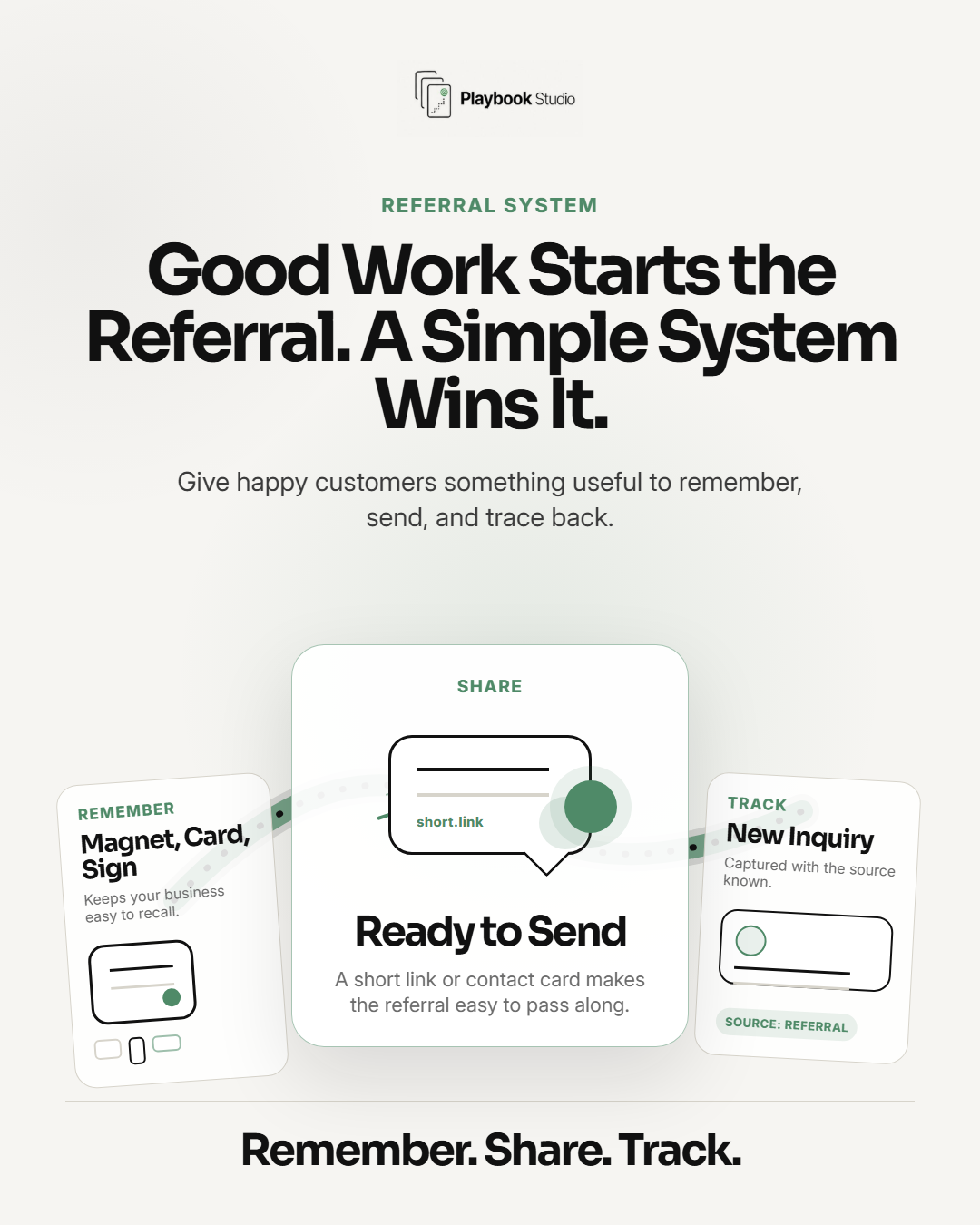
A simple referral system does three things:
- It helps customers remember you.
- It makes your business easy to share.
- It helps you track which referrals turn into leads.
You don't need a complicated rewards platform to start.
You need to make the next introduction easier.
1. Help customers remember you
Physical reminders still matter for local businesses.
They work best when they fit the service and stay useful.
A plumber, HVAC company, electrician, or repair business may leave a fridge magnet with a clear phone number and website.
A contractor may use a yard sign after a visible project, with the homeowner's permission.
A service company may place a clean sticker on a furnace, electrical panel, water heater, or serviced appliance when it is useful and appropriate.
A restaurant may use a takeout insert or catering card.
A salon, clinic, or retail shop may use a referral card, receipt message, or simple loyalty offer.
The goal isn't to cover everything with your logo.
The goal is to leave one useful reminder in the right place.
Before ordering materials, ask:
Will this help a customer find and share our information later?
If the answer is no, skip it.
2. Make your business easy to share
The easiest referral often happens in a text thread.
A neighbor asks for a roofer.
A friend asks who fixed the air conditioner.
A family member needs a caterer, mechanic, hairstylist, or repair shop.
Your past customer should be able to send your information in less than a minute.
Give them one simple option:
- a short website link
- a QR code
- a saved contact card
- a ready-to-forward text message
- a referral form when clearer tracking matters
Don't make the customer search for your website or explain your whole business.
Send referred customers to a clear page that answers:
- What does this business do?
- Does it serve my area?
- Why should I trust it?
- How do I call, book, or request a quote?
The physical and digital pieces should work together.
A magnet, referral card, yard sign, or follow-up text can all point to the same simple next step.
Ask after a positive moment
Many owners avoid asking for referrals because they don't want to sound pushy.
That's reasonable.
The best time to ask is after the customer has a reason to feel good about the business:
- after a completed job
- after a compliment
- after a positive review
- after a repeat purchase
- after solving a frustrating problem quickly
Keep the ask simple:
If you know anyone who needs help with this, here is the easiest way to send them our information.
You aren't asking customers to sell for you.
You're making it easy for them to help when the right conversation comes up.
Use incentives only when they help
Some referral systems include a reward.
That can work, but it isn't required.
A service business might offer a small gift card, account credit, maintenance credit, or thank-you gift.
A restaurant, salon, clinic, or retail shop might use a simple loyalty reward.
Keep it easy to understand and easy to honor.
Before offering an incentive, ask:
- Will customers understand it quickly?
- Can we track it reliably?
- Can we fulfill it consistently?
- Will it attract the kind of customer we want?
If not, start without it.
3. Track the referrals you receive
A referral system is incomplete if you can't tell which referrals are working.
Start with a simple process:
- Ask every new lead how they heard about the business.
- Record the source in your form, CRM, spreadsheet, or booking system.
- Capture the referring customer's name when possible.
- Thank the customer who sent the referral.
- Deliver any promised reward.
- Respond to the new lead quickly.
Referred leads still need follow-up.
A warm introduction can go cold if the call is missed or the form sits unanswered.
Tracking also tells you what to keep using.
Are calls coming from yard signs?
Are customers forwarding your short link?
Are referral cards being used?
Are certain customers sending the right kind of jobs?
You don't need perfect data.
You need enough visibility to improve the system.
Build the simplest version first
Start here:
- Pick one physical reminder.
- Create one easy digital sharing path.
- Decide when your team will ask.
- Add one referral-source field to your lead process.
- Review referred leads once a month.
That's enough to start.
Don't turn customers into salespeople.
Make it easier for happy customers to send the right people your way.
Remember. Share. Track.
If you want help mapping the simplest version for your business, Playbook Studio can review your current customer journey and build a plain-English referral-system action plan.
Want help building a referral system that is easy to use?
Playbook Studio can review your customer journey and map the simplest referral reminders, sharing paths, and tracking steps for your business.
More local business website fixes
- Build Contact Forms That Help You Find the Right Jobs Faster
- If You're Not Using a CRM, You're Losing Business
- Calls to Action Are Weak
- You Sound Like Everyone Else
- Website Traffic but No Leads?
- Does Your Website Build Enough Trust?
- Why Your Website Is Not Building Trust
- Site Does Not Explain Services Clearly
- How to Tell What Marketing Is Working
- How Fast Should You Follow Up With Leads?
- Why Don't Leads Turn Into Bookings?
- Should You List Service Pricing?
- Why Your Google Business Profile Gets No Calls
- Your Website Should Tell Us Where You Work
- Tired of Buying Junk Leads?